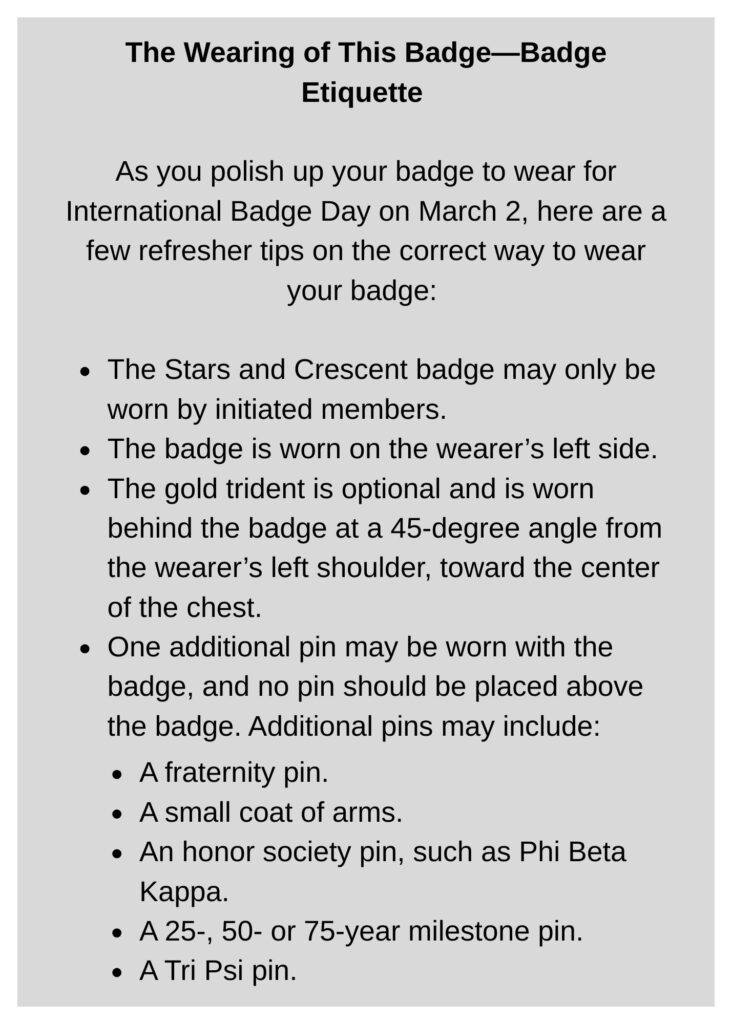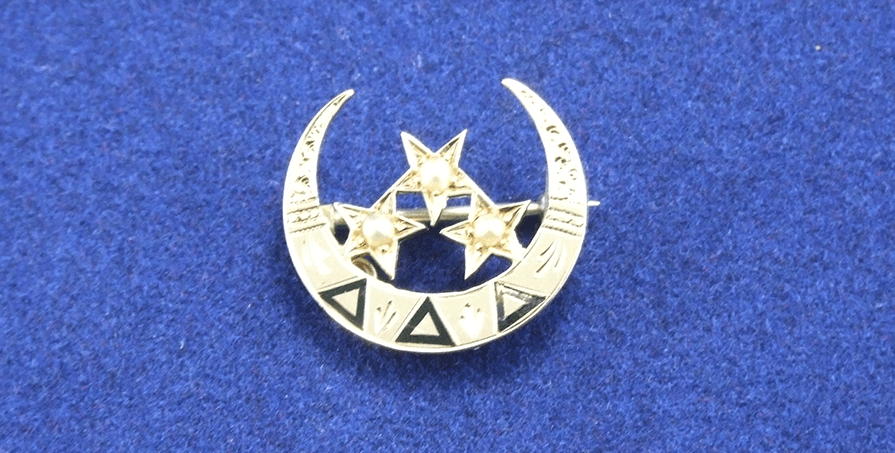
On March 2, we celebrate International Badge Day and reflect on the history and meaning behind our beloved stars and crescent. Do you remember the first time the Tri Delta badge was pinned over your heart? More than a symbol of membership, the badge represents a lifelong promise to uphold the values of truth, self-sacrifice and friendship that define Tri Delta.
“Situated above a crescent moon are three stars, and these stars remind us of the values on which Tri Delta is built. As young women, we accept the Stars and Crescent badge, and in return, we promise to be faithful to these values. We pledge loyalty to Delta Delta Delta and spend our lives striving for the ideals set forth by our Founders. So it has been since Tri Delta’s beginning.” —The Trident, Fall 2004.
The History of Our Beloved Badge
Just as membership carries deeper meaning for those who know the Ritual and understand our Founders’ vision, the badge is more than a symbol. It reminds us that true friendship is built on truth and self-sacrifice and that character deepens through membership.
When Founders Sarah Ida Shaw and Eleanor Dorcas Pond, both Boston, were conceptualizing of their new organization, they carefully considered the badge. Sarah initially envisioned beautifully jeweled monograms and favored emeralds to represent white, yellow and blue. Eleanor gently cautioned that it would not be fair to require an elaborate or expensive design. Sarah agreed, and together, they decided that the badge should be simple yet meaningful—special but accessible to all.
The result was a crescent moon embracing three stars, created to reflect the foundational values taught at Initiation. A local jeweler agreed to roll the gold thin to keep the cost at $1.25, provided that two dozen were ordered.
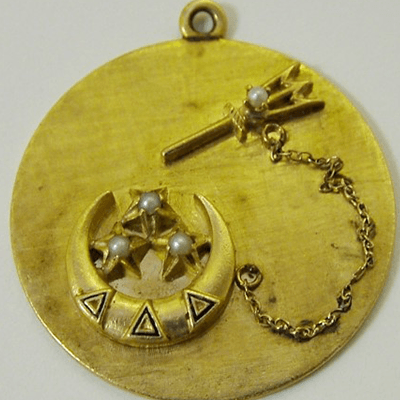
The trident guard appeared in 1889 when Tri Delta installed its first chapter beyond Alpha Chapter. Originally inscribed with chapter letters, the trident remains available today.
Sarah’s 1897 handwritten “Regulations of Delta Delta Delta” formally described the badge as follows. “The badge of The Stars and Crescent Degree shall consist of three stars and a crescent of three hundred degrees bearing three Deltas in enamel and united by a chain of twenty-seven links to a Trident guard pin bearing the chapter letter.”
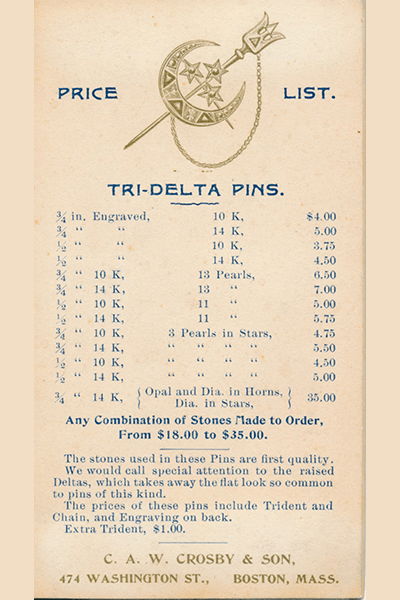
In the early years, badges were ordered from various jewelers, each interpreting the design differently. Some featured opals, diamonds, rubies, sapphires, emeralds, turquoise or pearls in varying sizes. Several of these antique badges are displayed in the Ginger Hicks Smith Museum & Archives at Tri Delta’s Executive Office and can be viewed in the “History and Archives” section of TriDelta.org under “Our Museum.”
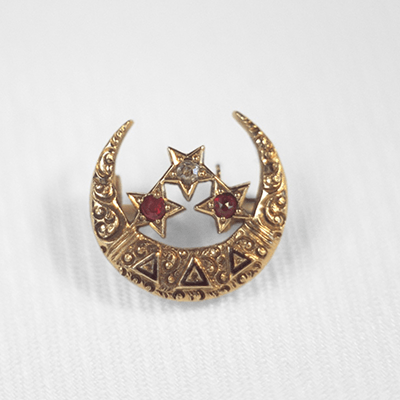
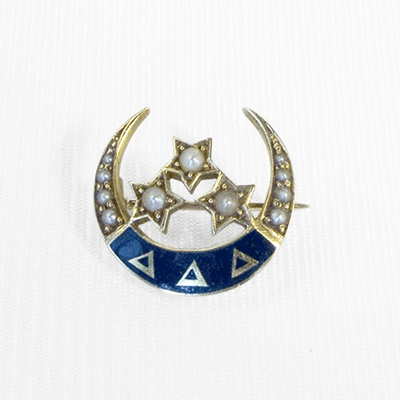
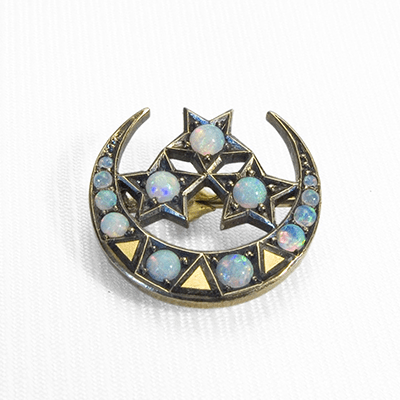
Though beautiful, these variations drifted from Eleanor’s vision of simplicity. In 1908, the convention body standardized the badge to one size, allowing only pearls or diamonds in the stars and a plain gold crescent with raised deltas. By 1909, badges could be purchased only from the official jeweler, O.C. Lanphear of Galesburg, Illinois, at a cost of $7 for pearls. In 1938, the Fraternity bylaws further standardized the design, allowing only pearls in the stars.
Selecting the pearl as the designated jewel reflects its symbolism of growth and development. Museum benefactor and former Executive Board member Ginger Hicks Smith, Emory, once noted that the standardization echoed Sarah Ida Shaw’s belief that character matters more than outward appearance.
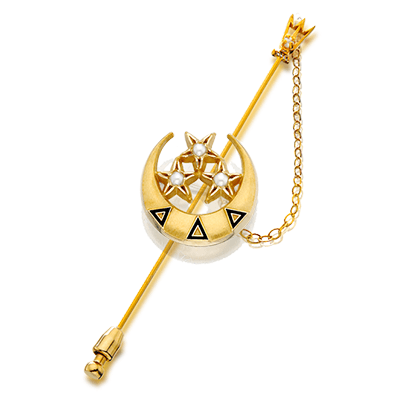
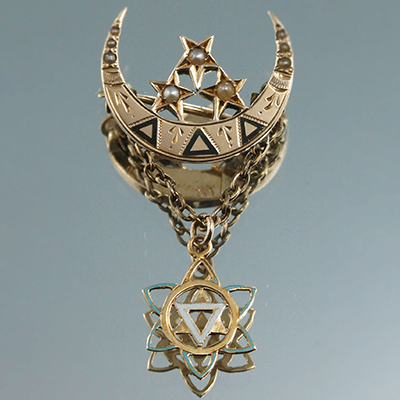
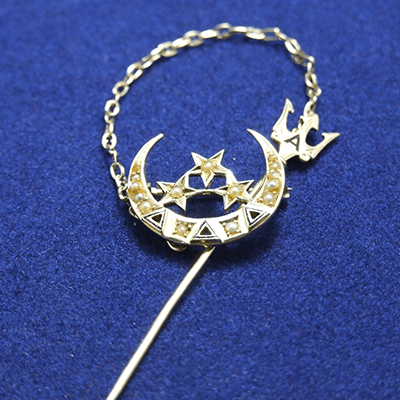
Today’s badge remains unchanged from the 1908 design and only slightly altered from Sarah and Eleanor’s original sketches. The earliest badges, made of very thin gold, were fragile and bent easily. Sarah likely replaced hers by 1890. Eleanor replaced hers after standardization in 1908 and wore it proudly to Tri Delta gatherings, a tangible link between our Founders and the badge we wear today.